
The invisible layer that senses life.
PulsEye turns the wireless signals already present in every room into a continuous, privacy-preserving physiological sensor — with no cameras, no microphones and nothing on the body.
One sensing platform,
built end-to-end.
PulsEye is a full-stack deep-tech system: purpose-built radio hardware, proprietary signal processing and AI models, all engineered in-house. It monitors heart rate, breathing, presence and sleep from ambient Wi-Fi, and pairs with a hardware-verified sensor for reliable bed-exit and fall alerts — one platform designed to carry every future ambient-monitoring capability on our roadmap.
Sensing
Wi-Fi Channel State Information captured many times per second — a rich fingerprint of how signals move through the room.
Signal Processing
Patented methods isolate the micro-movements of a beating heart from noise, motion and environmental interference.
Intelligence
AI models convert clean signal into physiological insight — continuous heart-rate awareness, without contact.
Every heartbeat leaves a trace in the air.
Wireless signals fill every modern room. As they travel, they reflect off everything they meet — including the human body. Even the microscopic chest motion caused by a heartbeat changes those reflections in a measurable way. PulsEye reads that change.
From noise to physiology.
Raw CSI is chaotic — every movement in a room shapes it. Our pipeline separates the physiological from the incidental.
01 · Capture
Channel State Information is sampled continuously across subcarriers, capturing the full signal fingerprint of the room.
02 · Denoise
Filtering stages strip out environmental interference, multipath artifacts and gross motion unrelated to vital signs.
03 · Extract
Patented methods isolate the periodic micro-motion signature of the heartbeat from the cleaned signal.
04 · Infer
AI models transform the extracted signature into continuous heart-rate readings with confidence estimates.
Purpose-built.
Room-invisible.
PulsEye is not a repurposed router. The sensing units are engineered specifically for physiological CSI capture — antenna geometry, RF front-end and edge compute are all designed around one job: reading vital signs reliably in real rooms.
- Edge-first processing — signals are analysed on-premises; only derived readings leave the device.
- Minutes to install — compact wall units per room; no cabling overhaul, no infrastructure changes.
- No optical or acoustic sensors — physically incapable of capturing images or audio.
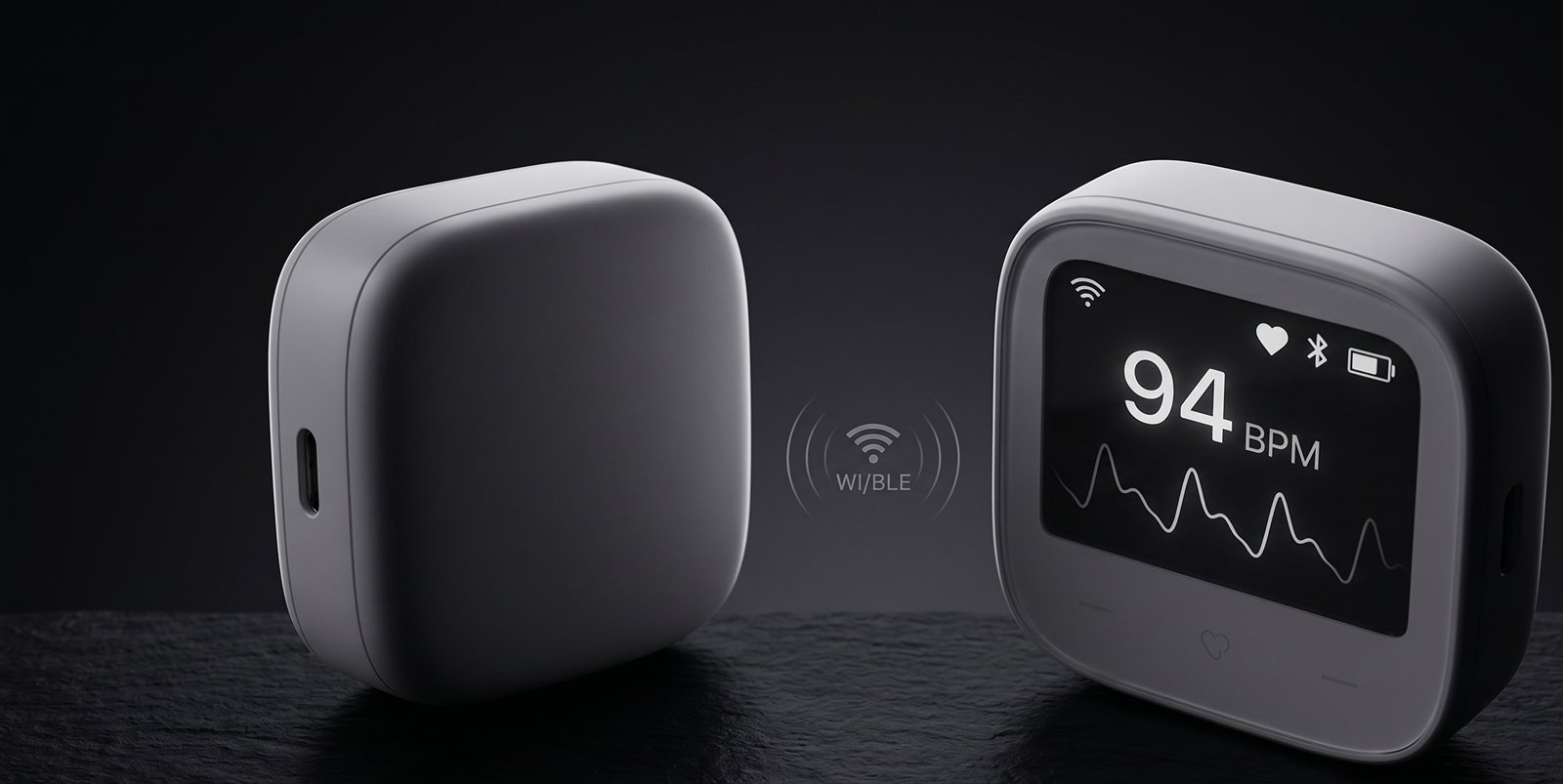
The PulsEye sensing unit.
Engineered to the last layer.
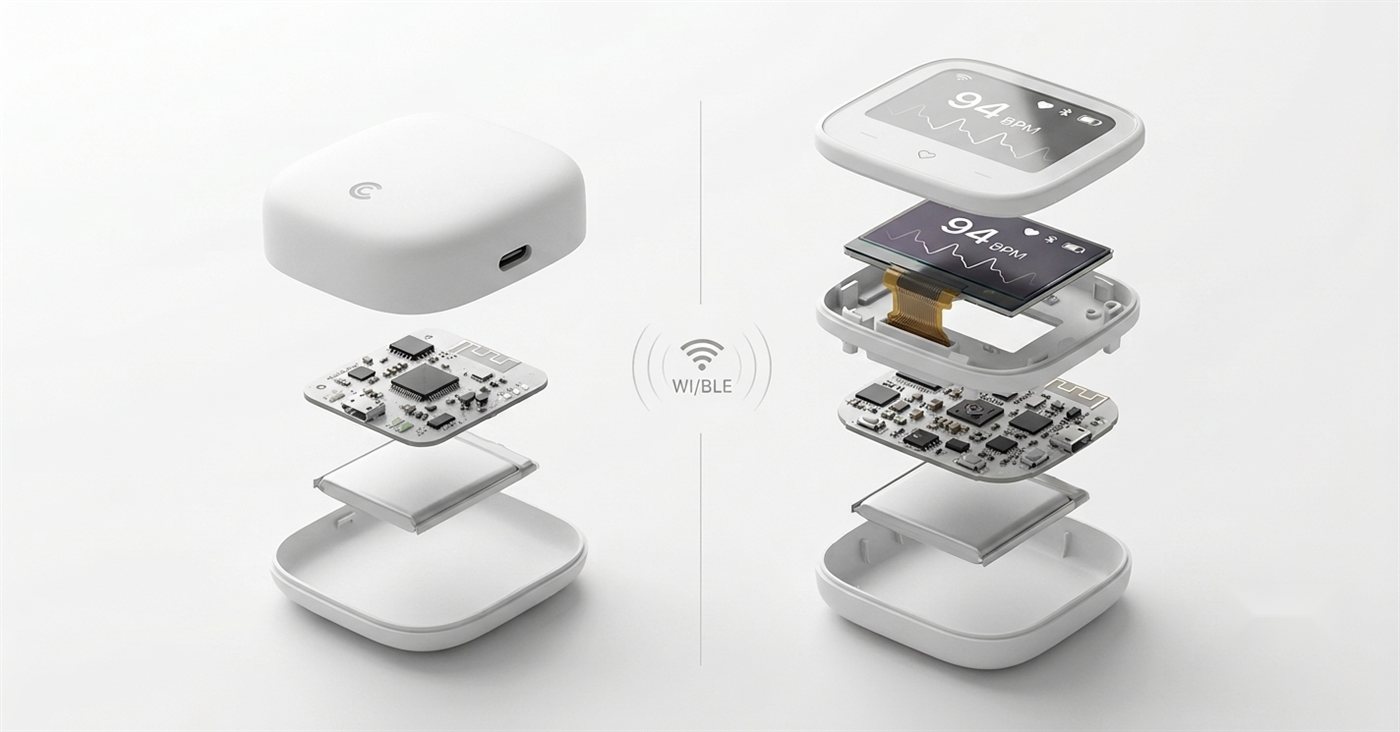
Exploded view — enclosure, antenna geometry, RF front-end and edge compute.
A defensible IP moat.
The core Wi-Fi CSI vital-sensing method is the subject of a patent application filed and published in India in 2025. In a Technical Advisory Committee forum under ICMR's MedTech Mitra initiative, the approach was noted — on the information presented — as novel, with no identified predicate device.
Filed & Published
Patent application filed and published in India, 2025 — covering the core sensing method.
No Predicate Found
Noted as a first-of-its-kind approach in an ICMR MedTech Mitra TAC forum, based on the information presented.
One platform.
Expanding capability.
The same sensing core already reads several vital signs and pairs with a hardware-verified bed-exit alert — and is designed to unlock what's next without changing the hardware in the room.
Vital-Sign Monitoring
Continuous heart rate, breathing, presence and sleep through ambient Wi-Fi sensing — validated internally against clinical reference devices.
Bed-Exit & Fall Alerts
A hardware-verified alert the moment a resident tries to rise — deterministic, not a probabilistic guess — so staff can help before a fall.
Multi-Occupant Sensing
Separating and attributing vital signs when more than one person shares a room — an active area of our R&D.
Clinical-Grade Certification
An independent efficacy study and the CDSCO medical-device pathway, to move from wellness insight toward clinical use.
Illustrative console preview — deployment dashboards are configured per facility.
PulsEye is positioned today as a wellness and caregiver-awareness aid — it complements, and does not replace, clinical judgement or staff protocols, and is not an emergency alarm of record. Accuracy figures are from internal testing against clinical reference devices (heart-rate error on the order of a couple of beats per minute in still conditions); an independent, ECG-referenced efficacy study is underway, and the CDSCO medical-device pathway will follow before any diagnostic claims are made.